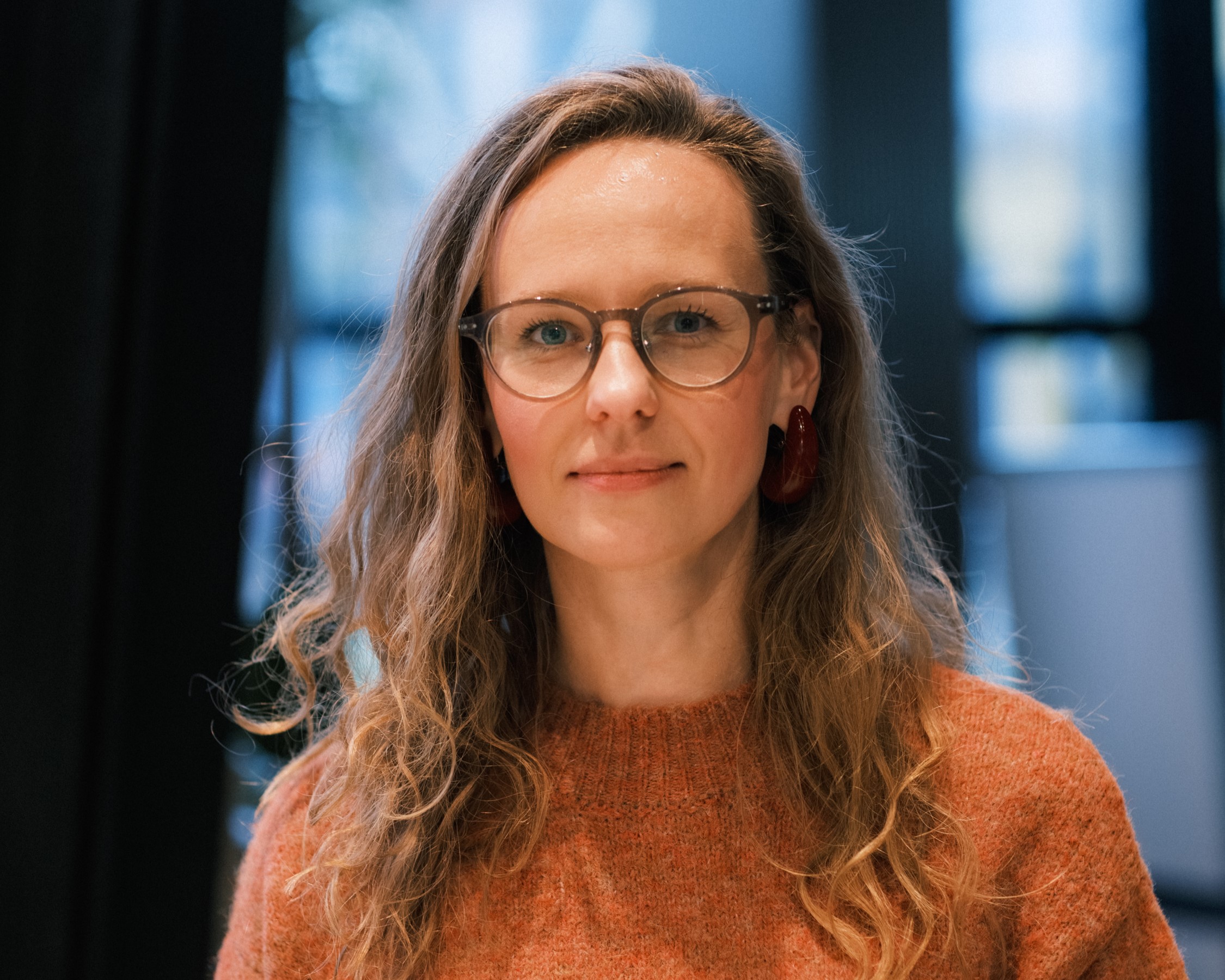
Merilin Metsma has joined the initiative Employers Against Domestic Abuse teams as Head of Learning and Development. In this role, she is responsible for strengthening the initiative’s learning and development work, setting strategic directions, and ensuring the quality and relevance of its learning programmes.
Merilin is a senior learning and development professional with extensive experience in designing and leading training systems and delivering development programmes across the public sector. She holds a PhD from Tallinn University of Technology, where her research examined how training is coordinated and applied within decentralised public sector systems.
We asked Merilin a few questions to get to know her better.
What motivated you to join the President Kaljulaid Foundation and the Employers Against Domestic Abuse initiative? What resonated with you most about this work?
The Employers Against Domestic Abuse initiative supports the vision of Estonia as a healthy and safe society – one where people can grow and live in both mental and physical wellbeing. I feel that this work aligns closely with my personal values. At the same time, I believe I can contribute meaningfully through my professional expertise in learning and development. This position is a strongly aligned with my values and skills.
What motivates you to work on preventing domestic abuse and engaging employers in this issue?
I am motivated by the belief that people function as a whole – their challenges and joys accompany them everywhere, including into the workplace. Just as awareness of mental health has grown significantly in recent years, domestic abuse problem also needs to be made visible. Ignoring reality does not make it disappear, awareness is the first and a crucial step towards change.
What particularly resonated with me was the initiative’s clear and courageous recognition of employers’ role: equipping them with the skills to recognise warning signs, offer support, and actively contribute to building a safer society. This work has a strong sense of purpose, and I feel that what I do truly matters.
How does your previous experience support you in this role?
I have many years of experience as a learning and development partner, designing training programmes and creating impactful learning solutions in close cooperation with subject-matter experts.
Why is it important for companies to be able to recognise domestic abuse and support those in need?
Because the workplace is often the only place where changes can be noticed and where someone experiencing abuse may feel safe and seek help. When employers have the skills and confidence to recognise the signs, they can make a real difference for people who might otherwise remain alone.
This is also closely linked to mental health and the quality of organisational culture. A safe workplace should be one of the cornerstones of a strong and healthy society.
What kind of change do you hope this initiative will bring about?
From my previous experience in an organisation that was part of the Employers Against Domestic Abuse initiative, I know that addressing domestic abuse in the workplace is understandably approached with caution. Personally, I greatly valued the organisation’s willingness to engage with the topic. That experience also confirmed for me that when employers are provided with a clear framework and practical support – such as shared language and guidance – they are well able to take ownership of the issue.
I hope that Employers Against Domestic Abuse grows into a movement where employers recognise their impact not only on working life, but on society’s overall sense of safety. That recognising domestic abuse becomes as natural as supporting mental health and safety culture. Above all, I hope that help reaches those who truly need it.